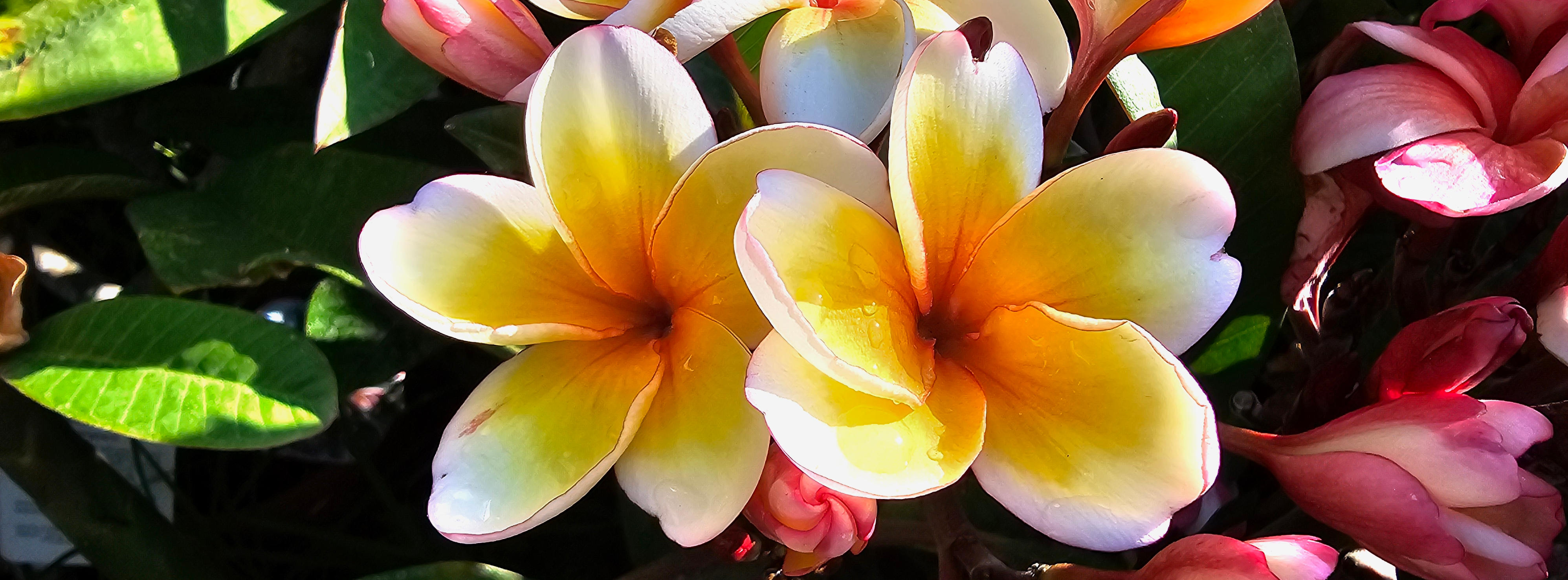
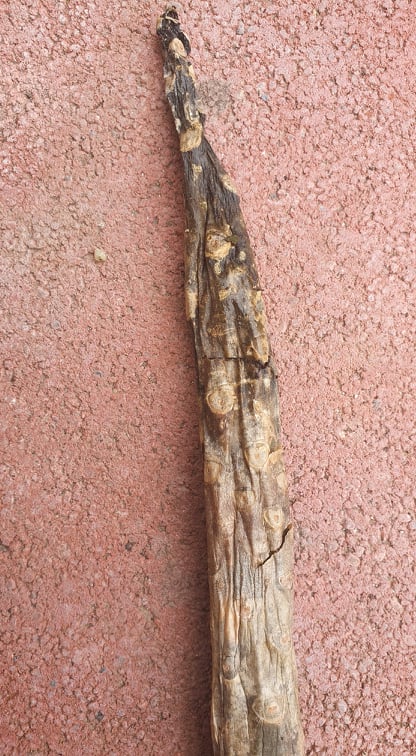
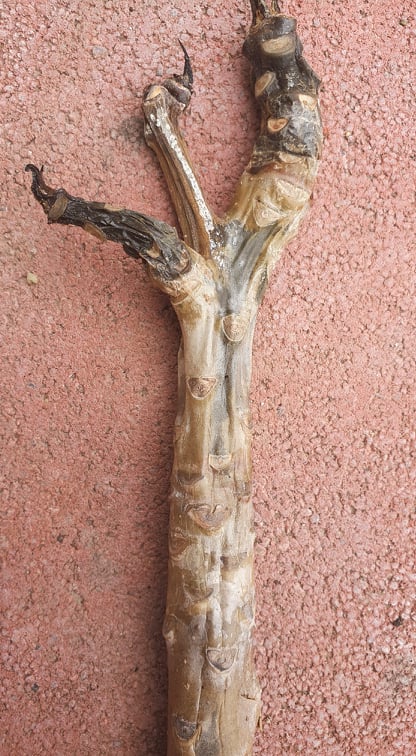
Was habe ich falsch gemacht? fragen sich die meisten Hobbygärtner. Nun, zuerst muss man bedenken, dass es sich um lebende Pflanzen handelt und alles lebende kann nun einmal auch Krankheiten bekommen. Dennoch kann man in 90% der Fälle anhand der Fäulnisstelle erkennen, welches Problem die Pflanze hat(te). Können folgende Ursachen haben: Black Tip Fungus (eine sehr gefährliche Pilzerkrankung, es MUSS geschnitten werden und die abgetrennten Teile müssen sicher entsorgt werden). Zugluft bei der Überwinterung. Man erkennt den Unterschied zwischen dem Pilz und der Zugluft darin, dass Triebe die durch Zugluft faulen, nicht so schwarz sind wie durch Pilz befallene. Fäulnis durch Blattbruch: Wer im Herbst die Blätter abbricht und nicht schneidet, kann dadurch das Bindegewebe der Pflanze verletzten und Bakterien haben so eine freie Bahn und die Stelle beginnt zu faulen. In solchen Fällen sollte geschnitten werden, weil sich Fremdkörper in Form von Bakterien od. Pilzen in der Pflanze befinden. Die typischen Fäulnisstellen an einer Plumeria Pflanze Wenn die Pflanze an einer solchen Stelle fault, ist meistens die Ursache, dass einer der Triebe versehentlich gebogen wurde und dadurch kleine Haarrisse in dem Bindegewebe entstehen und somit Bakterien in die Pflanze eindringen können. Eine weitere häufige Ursache ist die, dass der Hobbygärtner die alten Blütentriebe abbricht anstatt sie einfach von selbst abfallen zu lassen. Dadurch kann die Pflanze dort ebenfalls verletzt werden und Bakterien und Pilze haben freien Lauf! Wenn eine solche Stelle fault ist zu 95% ein Schnitt erforderlich. Oft kann man aber die oberen Triebe neu bewurzeln und der untere triebt neu aus. Eine faule Stelle an einem Seitentrieb kommt oft vor, weil der ungeduldige Hobbygärtner während der Winterpause oft an der Pflanze drückt ob sie evtl. weich ist… Macht er das zu oft, wird sie weich werden und faulen, weil das feine Gewebe unter der Rinde verletzt wird und dann zu faulen beginnt. Eine weitere Ursache können hier auch Verletzungen durch Blattbruch im Herbst oder durch Insekten (manche Insekten stechen kleine Löcher in den Stamm) sein. In die Verletzungen kommen Bakterien bzw. Pilze und können die Pflanze dann einfach befallen. Auch hier hilft oft nur ein Schnitt. Auch kann die Pflanze nach oder bei einem Spinnmilbenbefall verletzt werden und somit können Bakterien in die Plumeria eindringen und zur Fäulnis führen. Im obigen Bild sehen Sie ein typisches Beispiel für eine Fäulnis nach einem Spinnmilbenbefall. Foto (C). by Enrique Rodriguez Wenn die Pflanze kurz oberhalb der Erde fault, ist das oft ein Zeichen von zu hoher Feuchtigkeit vor allem während der Winterpause. Wenn eine Pflanze im Winterquartier dort beginnt zu faulen oder gar sich 90°C verneigt, ist das ein Zeichen, dass die Erde zu feucht war oder die Wassergaben im Winter eher keine gute Idee waren. Wichtig: Wenn Sie eine Pflanze ins Winterquartier stellen, sollte die Erde trocken bzw. staubtrocken sein. Wenn nein, lassen Sie die Blätter noch 1-2 Wochen an der Pflanze damit der Stoffwechsel in den Wurzeln nicht abrupt gestoppt wird und die Feuchtigkeit noch abgebaut werden kann.Durch was entsteht Fäulnis an meiner Frangipani?
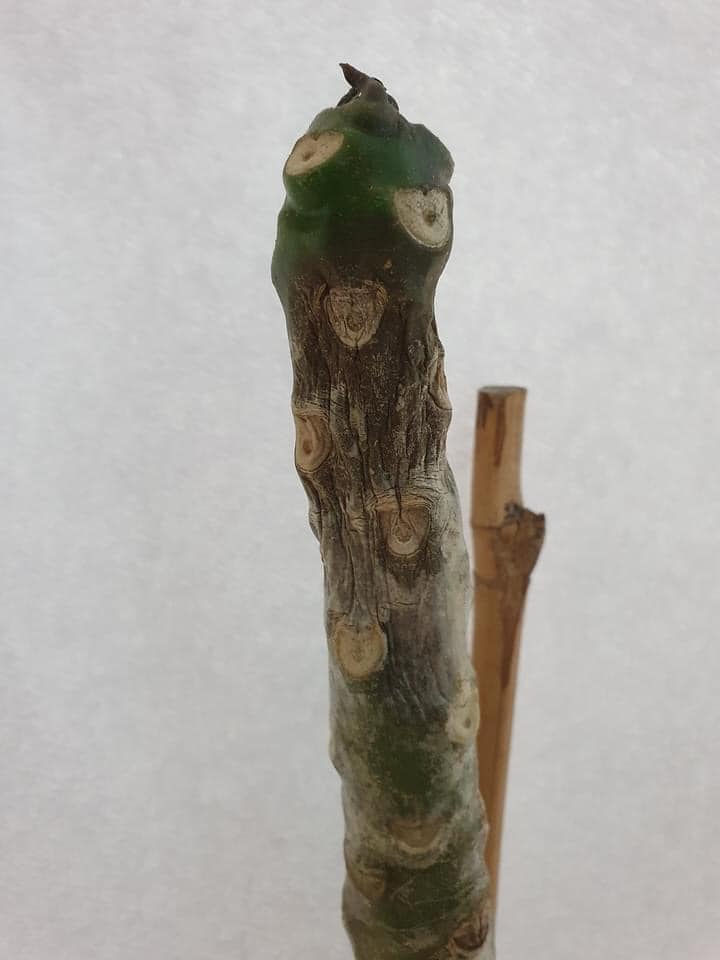
1. Schwarze / braune Triebspitze
Weitere Ursache kann leichter Frost an den Triebspitzen sein. Bei Zugluft und Frost ist es nicht notwendig zu schneiden. Die Triebspitze wird abtrocknen und unterhalb der kranken Stelle wir die Frangipani neu austreiben.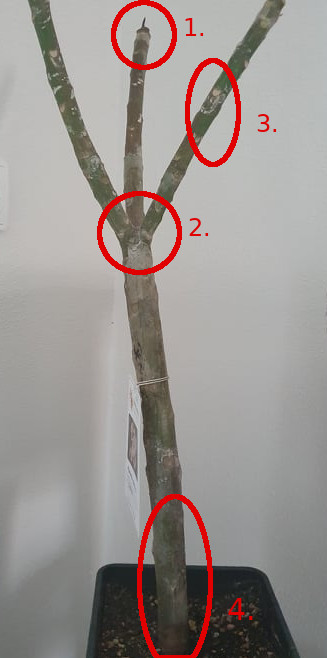
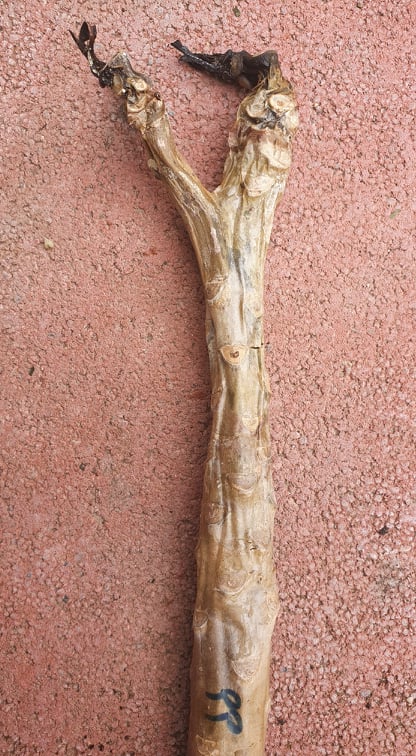
2. Fäulnis an einer alten Verzweigung oder einer alten Blüte
3. Fäulnis bzw. weiche Stellen auf der Fläche eines Seitentriebes
4. Fäulnis am Stammansatz über der Erde

Melde dich mit deiner E-Mail-Adresse und deinem Passwort an, um deine Bestellungen zu verwalten.
Wir haben dir einen 6-stelligen Sicherheitscode per E-Mail geschickt.
Mindestens 10 Zeichen, Groß- und Kleinbuchstaben, Zahl und Sonderzeichen.
Anmeldung am Server erfolgt
Erstellen Sie jetzt Ihr Kundenkonto: Behalten Sie Ihre Bestellungen im Blick und profitieren Sie von einem schnelleren Checkout.
Schließen Sie dieses Fenster nicht!
Schauen Sie in Ihre E-Mail und fügen Sie den 6-stelligen Code hier ein.
Registrierung wird durchgeführt…


