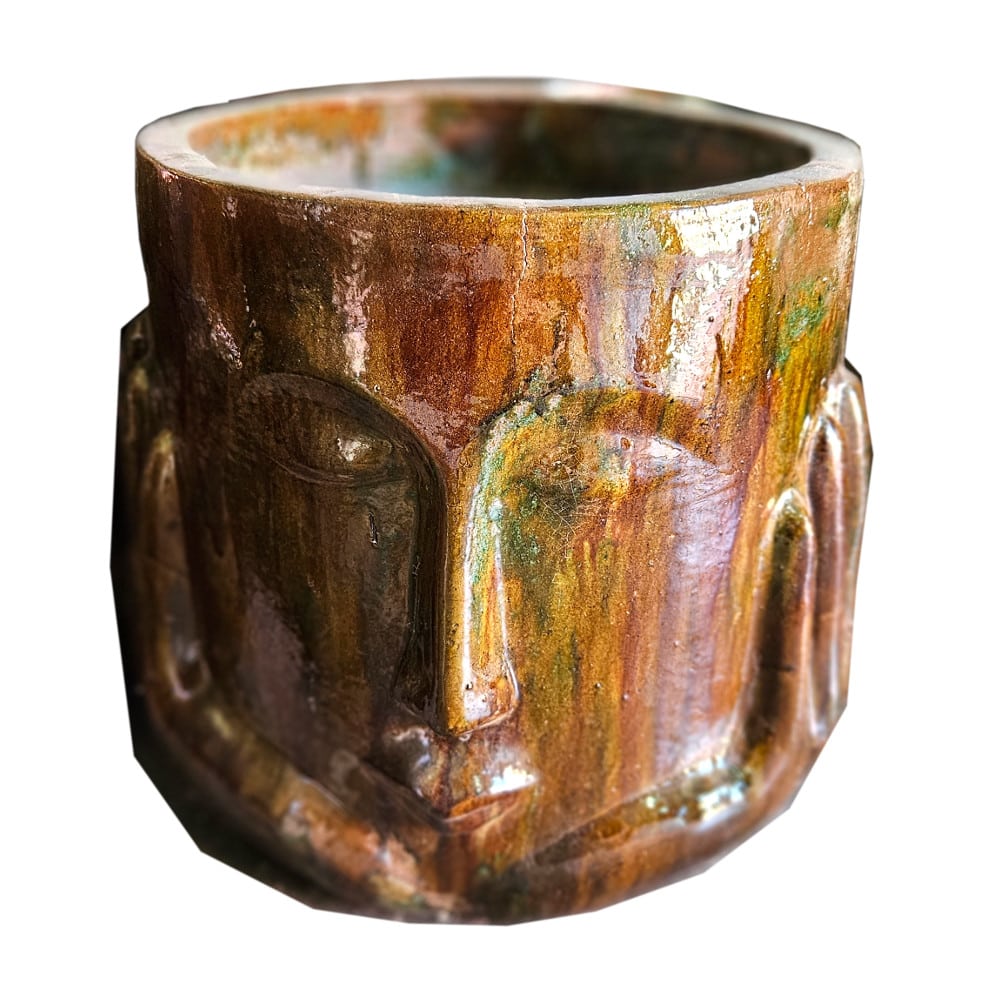
Matajiwa Buddha Eyes made of Albesia wood in red-gold with mosaic, 60 × 20 cm
This expressive variant of the Matajiwa Buddha Eyes captivates with its vibrant red, harmoniously complemented by golden ornaments and flame-like decorations on the sides. The 60 × 20 cm wall relief acts like a silent meditation in motion: The colors seem to flow, while the closed eyes maintain a calm and powerful aura. It symbolizes the inward gaze - intense and radiant at the same time.
Made from lightweight Albesia wood, the material is excellent for fine carving details. The red-gold coloring is carefully applied by hand in several layers. The lateral, wing-like shapes are individually designed and come together to create a harmonious overall image. Embedded mirror mosaics capture the light and reflect it multifacetedly, giving the artwork a lively aura. Each representation of the Matajiwa Buddha Eyes conveys a strong spiritual energy.
The combination of red Albesia wood, golden embellishments, and sparkling mosaic elements stands for excellent craftsmanship and profound symbolism. Matajiwa - the "Eye of the Soul" - achieves an almost fiery clarity here and is ideal for spaces that wish to radiate both energy and tranquility.
With dimensions of approximately 60 × 20 cm, this larger version offers an impressive presence while remaining elegant and balanced. Perfect for placement above a sideboard, in a yoga room, or anywhere you want to set a conscious and powerful accent.
The Meaning of the Buddha Wisdom Eyes
In the Buddhist tradition, the eyes of the Buddha represent a comprehensive perception encompassing the past, present, and future. Known from stupas like Swayambhunath in Nepal, these eyes gaze in all four cardinal directions and symbolize the compassionate and all-knowing wisdom of the Buddha.
Between the eyes is often a curved sign resembling a question mark, representing the unity of all things and the path to enlightenment through understanding. The outer eyes symbolize worldly seeing, while the inner, third eye recognizes the deeper truth behind the visible - the Dhamma.
Matajiwa, the "Eye of the Soul," reminds us of this connection to inner vision, clarity, and insight. This wall object is more than mere decoration: it represents the path from ignorance to the light of wisdom. The closed eyes invite calm, inner reflection, and the letting go of external distractions. They remind us: True understanding is gained when you close your eyes.
Traditional Wood Carving – Art and Craftsmanship
Each line of this Buddha Eyes relief is carved with great care from lightweight, fine-pored Albesia wood. The wood allows for precise carving and retains its form stability. The surface is hand-lacquered in several layers and gently sanded to create depth and give the relief a bright, almost floating effect. The contemplative form is created in small family workshops where the art of carving is preserved as a living tradition.
Product Details – Matajiwa Buddha Eyes (red-gold)
- Material: Hand-carved Albesia wood, red lacquered with golden accents and glass mosaic elements
- Design: Closed Buddha eyes with flame-shaped sides, central spiral symbol, and mirror mosaics
- Dimensions: approx. 60 × 20 cm
- Installation: Prepared on the back for easy wall mounting
- Use: Ideal wall object for meditation rooms, entrance areas, or creative living spaces
Retailer Note
Kayon Artisan
Sari, a dedicated artist from near Ubud, carefully creates these artworks by hand. Her studio is located in the heart of the city and is known for a wide range of Albesia and MDF art objects. The Matajiwa Buddha Eyes are among her most popular works - although they are actually called "Buddha Shoulders" because they represent the head and shoulders of the Buddha.
During our last visit, Sari granted us a generous discount, which made the collaboration especially pleasant - despite the often challenging traffic conditions around Ubud.
Handmade Note
Each Matajiwa Buddha Eyes artwork is crafted purely by hand. Due to the combination of carved wood, detailed painting, and mosaic embellishments, color and texture differences may occur, making each piece a unique work of art - a true testament to Balinese craftsmanship.
For more information on Balinese craft traditions and the specifics of handmade products, you can find it here.