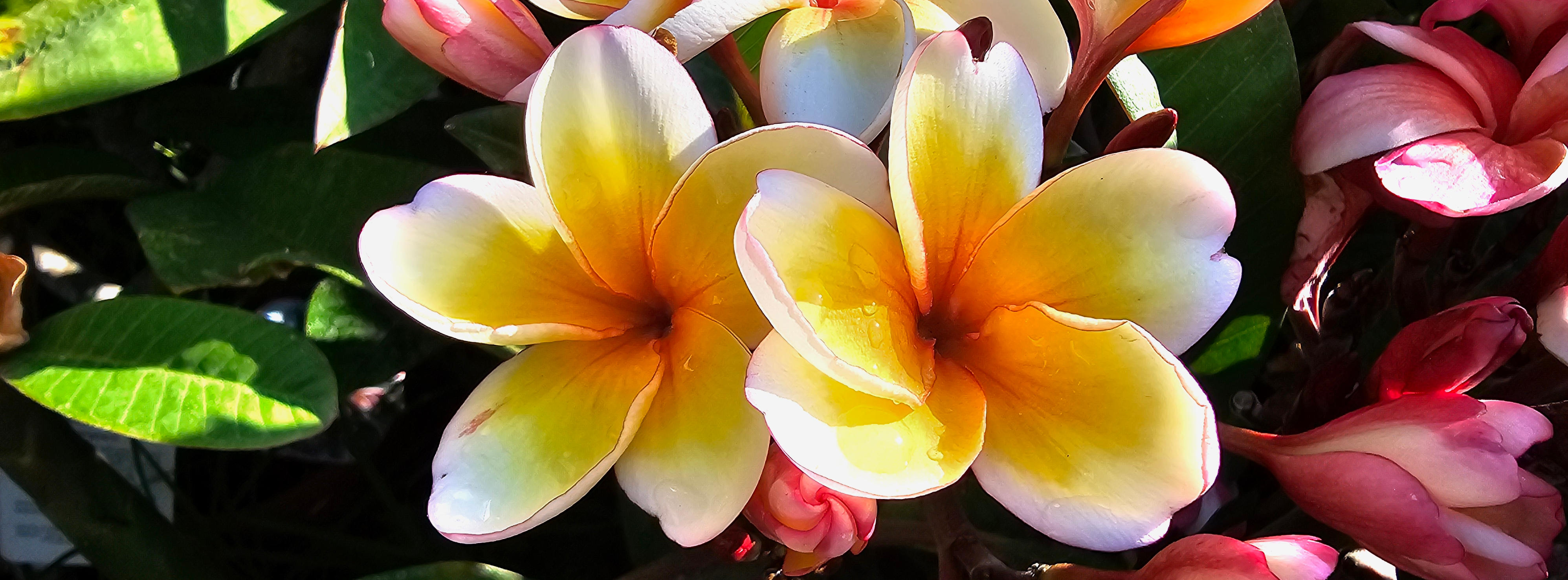
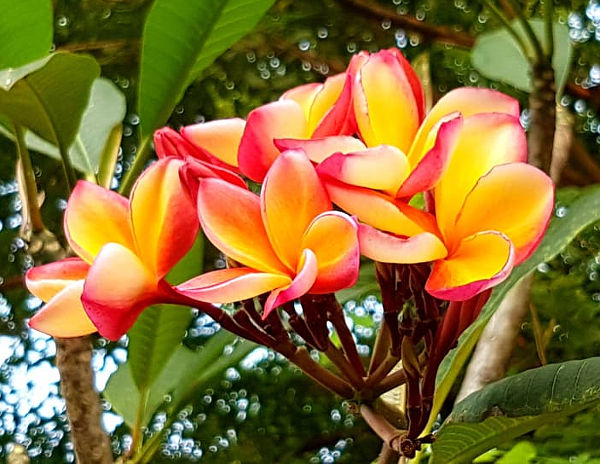
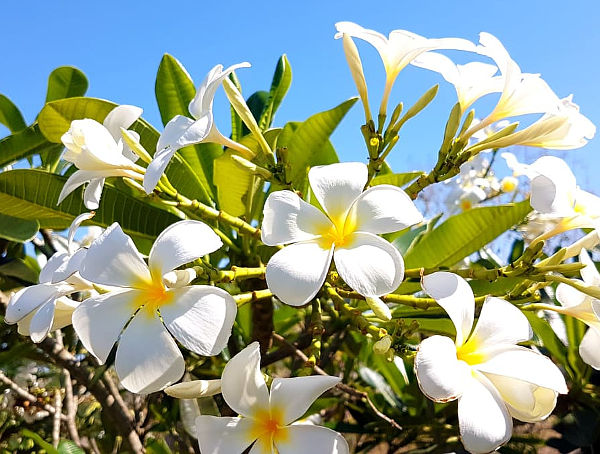
Die Frangipani ist eine recht anspruchslose Pflanze in der Pflege, aber ein paar grobe Fehler können dann schon zum Totalverlust der Pflanze führen. Viele Hobbygärtner haben sich für eine Frangipani entschieden (oft bleibt es dann nicht bei einer, sondern es werden 2…3… und mehr). In Europa können wir diese schöne Pflanze leider nur im Sommer im Freien kultivieren, müssen sie aber Ende Oktober (oder sobald die Temperaturen unter 10°C gehen) ins Warme holen und die Winterruhe einhalten. Doch was sind die wichtigsten Faktoren für eine gesunde und blühfreudige Pflanze? Sonne, Sonne und nochmals Sonne. Die Frangipani mag pures UV Licht. Und je mehr wir ihr davon geben können, umso besser wird sie sich fühlen und umso schneller wird sie blühen. Sie mag keinen Halbschatten oder Schatten. Sie braucht einen Platz in der prallen Sonne. Wasser. Frangipanis möchten im Sommer regelmäßige Wassergaben. Bei Temperaturen über 28°C ist es ratsam, sie 2x am Tag zu gießen (morgens und abends). Wenn die Temperaturen geringer sind, reicht auch eine großzügige Wassergabe am Morgen. WICHTIG: Bitte keine Untersetzer unter den Töpfen verwenden, weil die Frangipani „nasse Füße“ überhaupt nicht mag und dann zu faulen droht. Dünger! Im Sommer sollten Sie Ihre Frangipani regelmäßig (1x pro Woche) düngen. Dazu gibt es verschiedene Dünger die entweder das Wachstum der Pflanze fördern oder die Pflanze zur Blüte anregen sollen. Beide Arten von Dünger können Sie natürlich über unseren Shop beziehen. Beachten Sie aber bitte, dass ein Dünger nie eine Blüte garantieren kann. Es gehören einfach viel zu viele Faktoren noch dazu, dass die Pflanze einen Blütenstand entwickelt. Und wenn Sie noch keinen Dosierlöffel haben, empfehlen wir Ihnen unsere Dünger Dosierlöffel. Bei einer Zimmerhaltung sollten Sie Ihre Frangipani regelmäßig besprühen, weil das trockene Zimmerklima die Bildung von Spinnmilben an der Pflanze fördert. Und Spinnmilben gehören zu den unerwünschten Gästen auf der Frangipani. Weitere ungebetene Gäste sind Thripse und Weichmilben. Tipp: Sie können das Risiko des Befalls dadurch reduzieren, indem Sie Ihre Frangipani im Freien stehen lassen! Verwenden Sie für Ihre Frangipani Pflanzen immer spezielle Frangipani Erde. Wenn Sie Erde selber mischen wollen, so können Sie das natürlich auch tun. Vermeiden Sie aber Erden, die Feuchtigkeit halten und nicht wasserdurchlässig genug sind. Wenn die Erde zu „schwer“ ist, kann es zur Fäulnis der Wurzeln führen und somit zum Tod der Pflanze. Wir empfehlen unsere Plumeria Erdmischung aus dem Shop. Diese ist speziell auf die Bedürfnisse der Frangipani angepasst. Halten Sie auf jedem Fall die Winterruhe ein! Wir nennen Sie nur in Europa „Winterruhe“. Richtig heißt es Dormancy. Die Pflanze geht in eine Art künstlichen Schlaf. Aber woran erkennt die Pflanze wenn es soweit ist? Am Sonnenstand! Die Pflanzen im Freien werden langsam ihre Blätter abwerfen. Ab diesem Zeitpunkt sollten Sie das Gießen langsam reduzieren und dann komplett einstellen. Sie können die Pflanze überwintern wo Sie Platz dafür haben. Licht (das gilt nicht für Singapore Obtusa) ist nicht notwendig, da ohne Blätter keine Photosynthese stattfindet. Temperaturen sollten immer bei mindestens 10°C liegen. Sobald Sie Mitte / Ende April frisches Grün an den Spitzen der Pflanzen erkennen, können Sie langsam beginnen zu gießen und natürlich brauchen die Pflanzen dann auch wieder Licht. Sobald 3-4 Blätter ausgetrieben wurden, kann auch mit der Düngergabe begonnen werden. Die Singapore Obtusa ist eine der bekanntesten Plumerias aus den Urlaubsregionen Asien, Südamerika, Amerika. Sie ist (zusammen mit der Plumeria pudica) eine „immergrüne“ Pflanze. Das heißt sie geht zwar auch in die Winterpause (Dormancy) wie die Plumeria rubra, schläft aber nicht komplett. Sie sollte 1x pro Woche leicht gegossen werden und natürlich benötigt sie Licht. Gleiches gilt auch für die Plumeria pudica. Düngen Sie bitte die beiden Sorten nicht während der Winterruhe! Wenn Sie sich nicht sicher sind, ob Sie eine solche Plumeria besitzen, senden Sie uns einfach ein Foto der Pflanze und eine Nahaufnahme der Blätter. Dann können wir die Pflanze für Sie kategorisieren.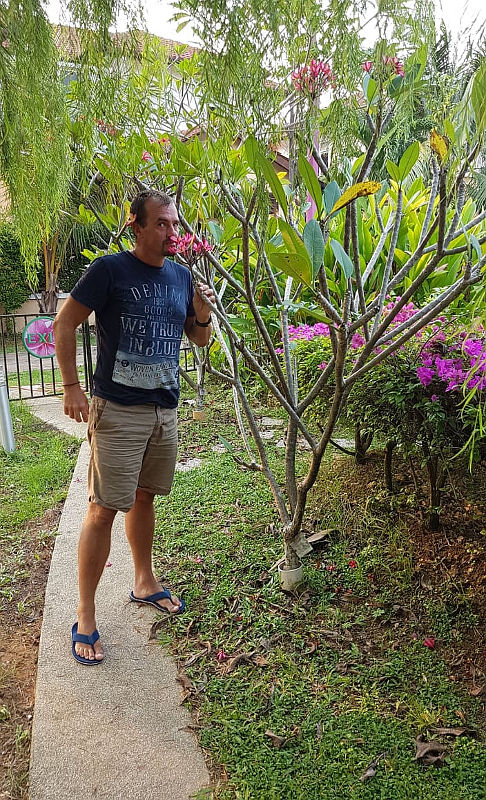
Frangipani Pflege
Please log in with your email address and password to manage your orders.
We have sent you a 6-digit security code by email.
At least 10 characters, upper- and lower-case letters, a number and a special character.
Signed in on the server
Create your customer account now: keep track of your orders and benefit from a faster checkout.
Do not close this window!
Check your email and enter the 6-digit code here.
Registration in progress…


